
Choosing between potatoes vs pasta? Plain baked potatoes have fewer calories and carbs at the same cooked weight, while regular pasta offers more protein and has a lower glycemic index. The variety, portion and preparation all help shape your meal.
Here’s how their typical nutrition profiles stack up. Both portions are 100g cooked, about 3½ oz, with no added sauce or toppings:
Per 100g cooked |
Baked white potato, skin on |
Regular enriched pasta |
|---|---|---|
Calories |
94 |
158 |
Total carbohydrates |
21.1g |
30.9g |
Fiber |
2.1g |
1.8g |
Protein |
2.1g |
5.8g |
Fat |
0.15g |
0.93g |
Potassium |
544mg |
44mg |
Iron |
0.64mg |
1.28mg |
Vitamin C |
12.6mg |
0mg |
Source: USDA nutrient data reproduced in White Potatoes, Human Health, and Dietary Guidance, Table 1. Values are rounded and refer to plain foods without sauce, oil or toppings.
If your heart is set on pasta for dinner, we’re right there with you. At Pastabilities, our Lower Cal Pasta gives you a lighter option for calories and net carbs, while our Protein Pasta brings extra protein to your favorite saucy bowl. Both have that comforting, tender but firm bite we love.
Keep reading to see how different potatoes and pastas compare, what glycemic index means for your meal, and where our lower-carb options fit in.
Potatoes vs. Pasta: Glycemic Index and Blood Sugar

Here’s something you might not expect from the nutrition chart: potatoes have fewer carbs per cooked gram, but pasta has a lower glycemic index. Glycemic index, or GI, compares how much foods raise blood sugar when equal amounts of digestible carbohydrate are tested.
A low GI is 55 or less, medium is 56–69, and high is 70 or more. The University of Sydney lists an average GI of 47 for boiled white spaghetti and 73 for boiled potatoes. That puts boiled spaghetti in the low-GI range and boiled potatoes in the high-GI range, giving pasta the edge when you’re choosing by glycemic index.
How You Serve Your Potatoes Matters
For potatoes, serving temperature can make a big difference. A study of North American potatoes compared several varieties and preparations, with these GI results:
Potato preparation |
GI |
GI category |
|---|---|---|
Boiled red potatoes, served cold |
56 |
Medium |
Roasted California white potatoes |
72 |
High |
Baked US Russet potatoes |
77 |
High |
Instant mashed potatoes |
88 |
High |
Boiled red potatoes, served hot |
89 |
High |
For a lower-GI potato side, boiled red potatoes served cold came out best in this study. They scored 33 GI points lower than hot boiled red potatoes, putting them in the medium-GI range. Try making them ahead for a chilled potato salad with fresh herbs and a tangy vinaigrette.
Your Portion Is Part of the Picture
Glycemic index tells you how a food’s carbohydrates affect blood sugar. Glycemic load, or GL, adds an important detail: how much carbohydrate is in the portion you actually eat. Together, they help explain why both your pasta choice and your serving size matter.
For example, a cup of cooked pasta contains twice as much carbohydrate as half a cup of that same pasta. The GI stays the same, but the larger serving has twice the glycemic load. Choosing a low-GI food is a useful first step; the amount you scoop into your bowl still counts.
How Different Potato Varieties Compare
Potato varieties do differ nutritionally, but the differences are more useful when you put numbers beside them. Here’s what changes when you swap a Russet for a red, yellow or orange sweet potato.
Russets vs. Reds: A Small Difference in Carbs

For 100g baked with the skin on, USDA reference values give a Russet about 97 calories, 21.4g carbs and 2.3g fiber. The same weight of baked red potato has about 89 calories, 19.6g carbs and 1.8g fiber.
So red potatoes have a small calorie and carb advantage here: about 8 fewer calories and 2g fewer carbs per 100g. Russets provide a little more fiber. Both supply roughly 550mg potassium per 100g, making them very similar choices for that mineral.
Yellow Potatoes: A Boost of Carotenoids

Those golden-yellow potatoes bring a little extra goodness to dinner. Their sunny color comes from carotenoids, plant compounds that include lutein and zeaxanthin. The International Potato Center found more total carotenoids in yellow-fleshed potatoes than in cream-colored ones.
Toss them into your favorite soup or roast a tray of wedges, and you’re adding more of these colorful plant compounds to a comforting potato side.
Sweet Potatoes: More Fiber and a Vitamin A Boost

Craving something a little sweeter with dinner? A 100g serving of plain baked sweet potato flesh, without the skin, has about 90 calories, 20.7g carbs and 3.3g fiber. That’s close to the calories and carbs in baked Russets and reds, with a little more fiber than either of those skin-on options.
That lovely orange color brings another benefit: beta-carotene, which your body turns into vitamin A. White-fleshed potatoes have very little of it, so this is where orange sweet potatoes really shine. Choose them when you want a comforting potato side that adds extra fiber and a generous helping of vitamin A.
How Different Pasta Varieties Compare
There’s a lot to love in the pasta aisle, from classic noodles to blends that bring extra fiber, more protein or fewer net carbs to your bowl. Here’s how the main options stack up, so you can find a good fit for your next pasta night.
Regular and Whole-Wheat Pasta

Regular durum wheat pasta is a good source of carbohydrates, which your body uses for energy. It also provides some protein, and enriched varieties contain added iron and B vitamins, including folic acid. It's a familiar option for pasta night, with that tender but firm bite we all love.
Whole-wheat pasta is another option, particularly if you're looking to add more fiber and whole grains to your meals. According to the American Heart Association, whole grains retain the bran and germ, which provide fiber, vitamins and minerals that are partly removed during refining.
Both varieties contain a similar amount of carbohydrates, so whole-wheat pasta isn't necessarily a low-carb alternative. The biggest differences are its fiber and whole-grain content, along with a slightly nuttier flavor and heartier texture.
Chickpea, Lentil and Gluten-Free Pasta

Chickpea and lentil pastas are common alternatives for anyone looking to add more plant-based protein and fiber to their meals. In a 2024 study comparing different pasta varieties, both chickpea and lentil pasta contained substantially more protein and fiber than the traditional durum wheat pasta tested.
They can also contain fewer carbohydrates than regular wheat pasta, although that doesn't necessarily make them low-carb foods. If reducing your carb intake is your main goal, compare the total carbohydrates and fiber per serving to see how different varieties stack up.
There's also a difference in the eating experience. Chickpea and lentil pastas can have a slightly earthy or beany flavor, and some varieties don't hold their texture quite as well as traditional pasta.
For a gluten-free option, rice and corn pastas offer a milder flavor that's closer to traditional noodles. However, they're often lower in protein and fiber than legume-based alternatives, with carbohydrate levels comparable to regular pasta.
If you're choosing gluten-free pasta for nutritional reasons, take a look at the ingredients and nutrition label. A gluten-free label tells you the pasta doesn't contain gluten, but it doesn't necessarily mean it's higher in protein, lower in carbs or more nutritious overall.
Better-For-You Pasta from Pastabilities
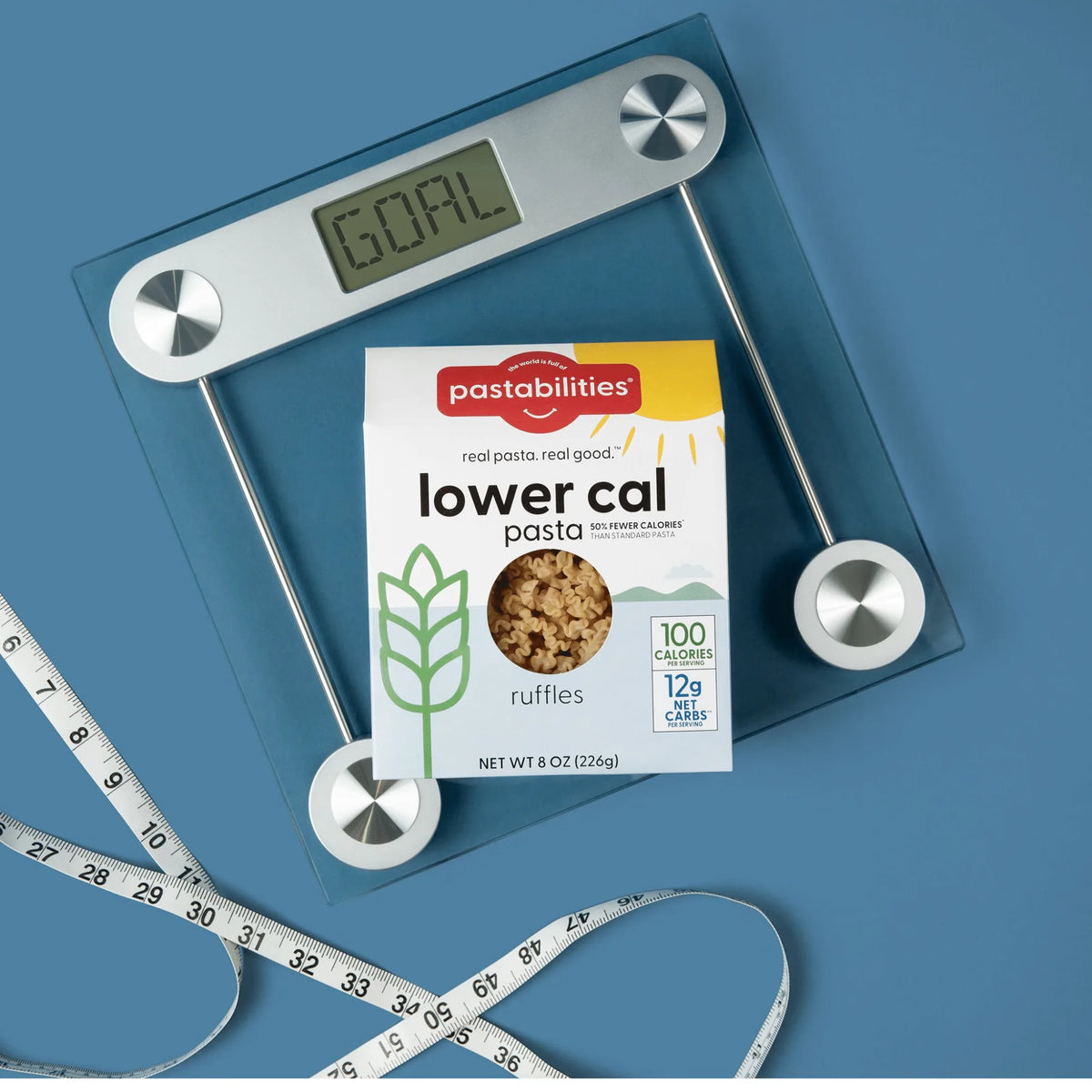
Want to keep your favorite pasta dinner while cutting back on net carbs? Our Lower Cal Pasta has 100 calories, 12g net carbs and 27g fiber per 2 oz dry serving, with the familiar taste and tender but firm bite of wheat pasta.
The ingredient doing much of that work is RS4 resistant starch, a modified wheat starch that resists digestion and acts as dietary fiber. It helps bring down calories and net carbs, while wheat flour and vital wheat gluten give the noodles their comforting texture. Try it with garlicky tomato sauce and a little Parmesan.
Still deciding which noodles belong in your pantry? Our lowest-carb pasta guide walks through more options, with a closer look at taste, texture and ingredients.
Which Should You Choose for Your Goals?
Start with what you’d like your dinner to do for you. A little more protein? More fiber? A satisfying portion with fewer calories? Here’s where each option has something to offer.
For Fewer Calories or Weight Management
Plain potatoes give you more food for fewer calories than regular pasta at the same cooked weight. Choose them when you want a generous side dish, or reach for our Lower Cal Pasta when you’re craving noodles with fewer calories. Add vegetables and a protein you like to make dinner satisfying, and include sauces and toppings when comparing the finished meals.
For More Protein or Fiber
For a bigger protein boost, our Protein Pasta brings 24g protein per 2 oz dry serving to your favorite pasta dinner. If fiber is your priority, our Lower Cal Pasta provides 27g fiber per 2 oz dry serving. Choose the option that gives you the nutrients you’re after.
For advice tailored to you, talk with your doctor or a registered dietitian about the foods and portions that fit your needs. They can help you put these comparisons into a meal plan that works for your health goals, especially if you’re managing diabetes or another condition.
Bring Your Favorite Comfort Food to the Table

So, are potatoes or pasta healthier? Both have nutritional benefits, but the better choice depends on what you're looking for. Potatoes provide potassium and vitamin C, while pasta offers protein and the versatility to create satisfying meals with your favorite ingredients.
And if you're watching your calories or carbs, you don't have to give up the pasta dishes you love! Our Lower Cal Pasta has just 100 calories, 12g net carbs and an impressive 27g of fiber per serving, all with the familiar pasta taste and texture you crave.
Toss it with your favorite sauce or try our Toasted Nut & Feta Low Carb Pasta for your next family dinner. With Pastabilities, you can enjoy a comforting bowl of pasta while keeping your nutritional goals in mind.